
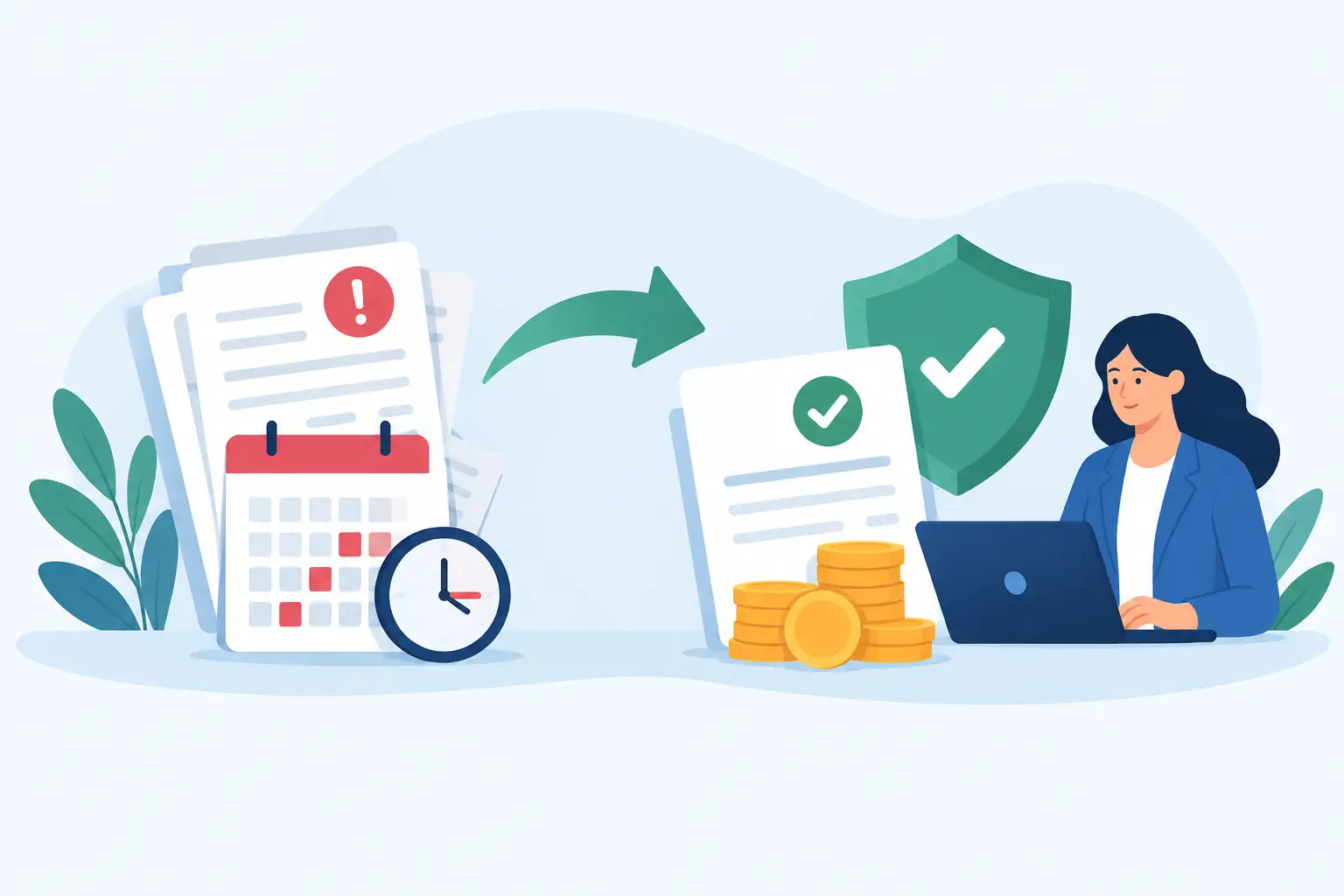
A customer who pays 30 days late is not just an accounting inconvenience. That delay can affect payroll, inventory purchases, supplier bills, and the confidence to take on the next project. The best ways to reduce late payments start before an invoice is sent: set expectations clearly, make payment easy, and follow up with a process your team can repeat every time.
Late payments are rarely caused by one issue. A client may have missed the invoice, found the payment process inconvenient, needed an approval, or questioned a charge. Your goal is to remove those avoidable delays while recognizing real disputes early.
Set payment terms before work begins
The best time to discuss payment is before you deliver a product or begin a project. Include your payment terms in estimates, contracts, purchase orders, and customer onboarding documents. When a customer has already accepted the terms, the invoice feels like the next expected step rather than a new negotiation.
Use specific language. Net 30 is clearer than payment due soon, but a calendar date is even better: Payment due April 30, 2026. State accepted payment methods, any deposit requirement, late fee policy, and the contact person responsible for billing questions.
For project-based work, consider breaking large jobs into deposits and milestones. Waiting until the final delivery to bill for a three-month project puts all of the collection risk at the end. A deposit protects your cash flow, while milestone invoices give the customer smaller, easier-to-approve payments.
There is a trade-off. Strict terms may not suit every long-standing customer or larger organization with fixed accounts payable cycles. In those cases, agree on their process in advance. Ask when they need the invoice, whether they require a purchase order number, and what documentation their team needs to approve payment.
Send accurate invoices immediately
An invoice cannot be paid if it is incomplete, unclear, or sitting in someone’s draft folder. Send it as soon as the goods are delivered, the service is completed, or a project milestone is reached. The longer you wait, the less urgent the payment feels to the customer.
Every invoice should show the customer name, invoice number, issue date, due date, line-item descriptions, quantities, taxes, discounts, payment instructions, and the correct contact details. If the customer gave you a purchase order number, include it. For service work, reference the approved estimate, project name, or service period so the customer can quickly match the bill to the work received.
A professional document layout also matters. Your logo, consistent company information, and a clean format make an invoice easier to recognize and route internally. Branded invoices are not just a presentation detail. They reduce confusion when a busy customer is reviewing several vendor bills.
Before sending, check the basics: Is the billing email current? Does the total match the agreed price? Is the due date visible? A five-minute review can prevent a two-week payment delay caused by a simple error.
Use a reminder schedule, not memory
A polite reminder before the due date is often more effective than a firm message after the account is overdue. Customers manage many bills, and a well-timed reminder helps your invoice stay visible without creating tension.
Set a standard sequence for every customer. Send the invoice when it is created, a friendly reminder a few days before the due date, and a direct notice on the due date if payment has not been received. Follow with another reminder shortly after the due date. Each message should include the invoice number, amount due, due date, and simple payment instructions.
Keep the first reminders helpful and professional. Assume the invoice may have been missed or delayed in approval. If payment is still outstanding, ask whether there is a problem with the invoice or whether the customer can confirm a payment date. This question often identifies a dispute, missing document, or internal approval hold before it becomes a long collection issue.
Automation makes this process more reliable, but it should not make your messages sound cold. Use clear templates, then personalize follow-up for larger balances, important accounts, or customers with a history of prompt payment.
Make paying you easy
Even customers who intend to pay can delay if the process requires extra work. If you only accept one payment method or provide unclear bank details, the invoice can remain in an approval queue longer than necessary.
Offer the options that fit your business and customers, such as ACH, card payments, bank transfer, or checks. Put the payment instructions on the invoice rather than in a separate email that can be lost. For recurring customers, consider scheduled payments or saved payment arrangements when appropriate and authorized.
Convenience has a cost, especially with card processing fees. Decide which methods make financial sense for your margins and customer base. For a small invoice, a card fee may be worth the faster payment. For a large invoice, ACH or bank transfer may be the better option. The key is to make the preferred method obvious and easy to use.
Respond to billing questions before they become overdue balances
Some late payments are really unresolved service issues. A customer may not understand a charge, believe a quantity is incorrect, or need proof of delivery. Treat these questions as a priority. The faster your team responds, the less likely the invoice is to fall outside the customer’s payment cycle.
Assign ownership for billing questions. Sales may understand the agreement, operations may confirm delivery, and finance may issue the invoice, but the customer should not have to chase three people for an answer. One person should coordinate the response and keep the invoice status current.
Separate disputed and undisputed amounts when possible. If a customer questions one line on a larger bill, ask them to pay the portion they agree with while you resolve the remaining amount. This approach protects cash flow and keeps a small issue from holding up the entire payment.
Follow up consistently when payments are overdue
Once an invoice is overdue, follow up on a schedule. Avoid the common pattern of sending several emails in one week and then waiting a month. Consistency shows that your business takes its payment terms seriously.
Start with email, then use a phone call for larger or older balances. A short call can reveal whether the customer changed accounts payable contacts, lost the invoice, or has a temporary cash flow problem. Document the promised payment date and follow up promptly if that date passes.
For repeat late payers, tighten future terms. You might require a deposit, shorten payment periods, pause additional work until the account is current, or set a credit limit for product orders. These decisions should be applied fairly and communicated clearly. A valuable customer may deserve flexibility during a genuine short-term problem, but repeated exceptions can put your own business under pressure.
Late fees can encourage timely payment, but they work best when they were disclosed in advance and applied consistently. If your main goal is to preserve a strong customer relationship, a conversation may be more productive than immediately charging a fee. It depends on the balance, the customer history, and the reason for the delay.
Track receivables in one place
You cannot manage overdue invoices from scattered spreadsheets, inboxes, and paper notes. Review an accounts receivable report at least weekly. Group invoices by how long they have been outstanding so your team can focus on balances that need action now, not after they become difficult to collect.
Look for patterns. If many invoices are late from one customer, the issue may be their process. If many customers delay payment after receiving a certain type of invoice, review your documentation, timing, or approval requirements. If invoices are routinely sent late, the problem is internal and can be fixed with a better workflow.
A cloud accounting system can help your team create invoices, track due dates, record payments, and see outstanding balances from the same workspace. With MyCloudBook, businesses can also use customized document layouts and multi-user access so the people handling sales, operations, and finance can work from the same current information.
Build a process your team can maintain
Reducing late payments is not about sending harsher emails. It is about making payment a clear, routine part of how you sell, deliver, invoice, and support customers. Start with one improvement this week: send invoices faster, add a pre-due reminder, or review every overdue balance on a fixed day. Small, consistent actions give your business more control over cash flow and leave less money waiting in someone else’s inbox.