
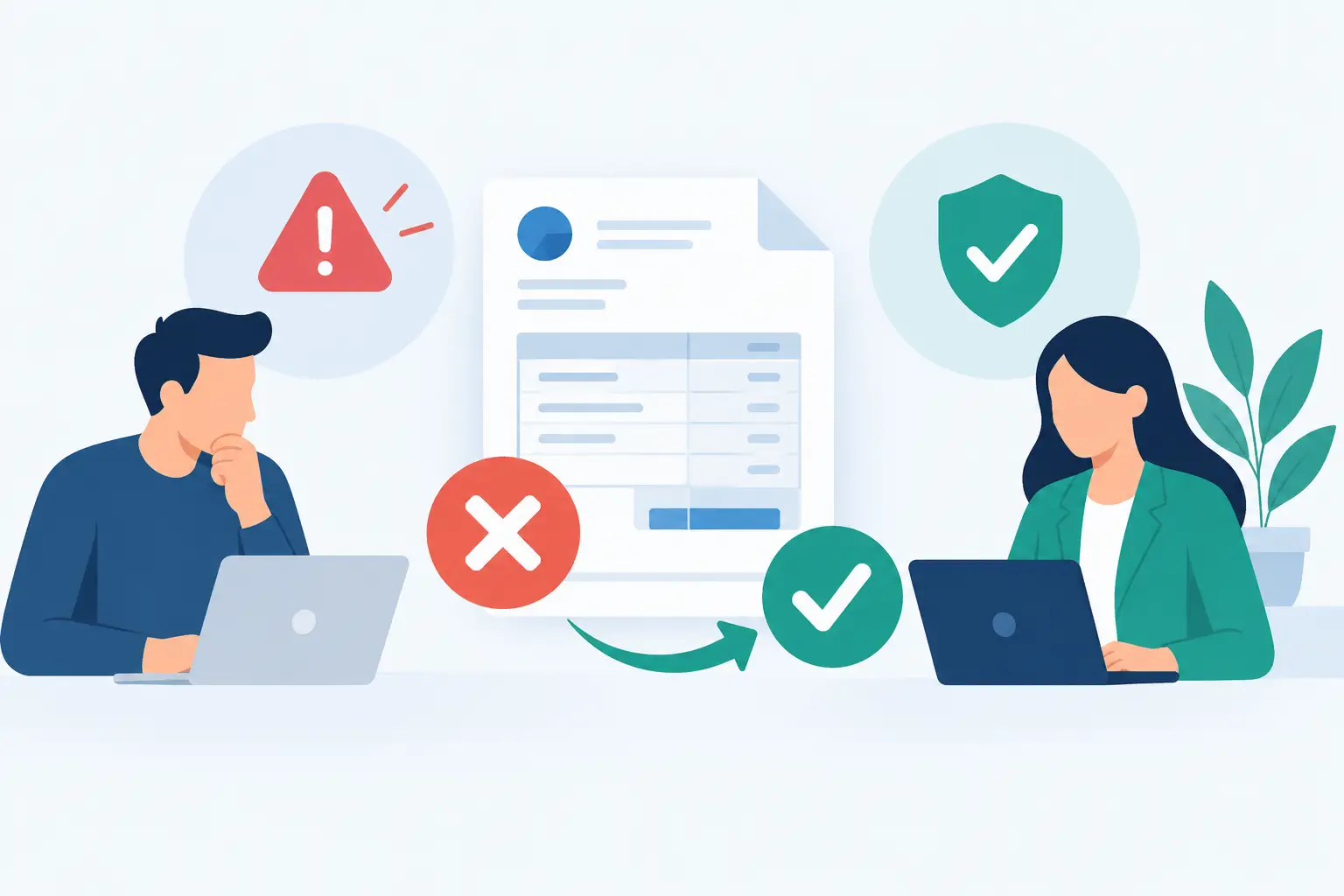
A customer may not say, “I refuse to pay.” More often, they ask a question: “What is this charge?” “Did we approve these hours?” “Why is this different from the quote?” That pause can hold up payment for weeks. Understanding why invoices get disputed helps you protect cash flow before a small billing question becomes an overdue balance.
For small and midsized businesses, invoice disputes are rarely only an accounting problem. They often start earlier - when a scope changes, inventory is delivered in parts, a customer contact changes, or someone sends an invoice without the supporting details the buyer expects. The fix is not sending more reminders. It is building a billing process that makes each charge easy to recognize, verify, and approve.
Why Invoices Get Disputed
Most disputes fall into a few practical categories: the customer does not understand the charge, does not believe it matches the agreement, believes something was missing or incorrect, or says the invoice went to the wrong person at the wrong time. Each category requires a different response, but all of them improve when your records are organized from the beginning.
The invoice does not match the agreement
A customer may have approved a proposal for $5,000, then receive an invoice for $6,250. The additional amount may be entirely valid - perhaps the customer requested extra work, additional materials, expedited shipping, or another project phase. But if the approval for that change lives only in a phone call, the invoice can look like an error.
This is especially common in service businesses. Time-based work, change orders, travel fees, rush charges, and pass-through expenses can accumulate quickly. In product-based businesses, substituted items, partial shipments, freight, taxes, and price changes can create the same gap between expectation and invoice.
A clear description matters as much as the total. Instead of a vague line item such as “Additional services,” use language the customer can connect to the work performed: “On-site installation, approved May 12,” or “Additional 18 hours for revised product catalog.” Include the relevant purchase order, estimate, contract, or project reference when your customer uses one.
Missing detail makes a valid charge look uncertain
An invoice can be mathematically correct and still be difficult to approve. A single line for “Consulting - $3,800” leaves the customer with questions: Which work? Which dates? Which team member? Was this part of the monthly agreement or outside it?
Too much detail can also be unhelpful. The goal is not to attach every internal note. Give the customer enough information to match the invoice to the value they received. For recurring work, that may mean the billing period and service name. For a project, it may mean milestones, approved hours, or delivered items. For inventory, it may mean item names, quantities, unit prices, and shipment references.
Customized invoice layouts are useful here because different customers need different information. A contractor may need job-site details. A wholesale buyer may need a purchase order and delivery reference. A professional services client may need the project name and date range. One generic document does not always serve every relationship well.
Pricing, quantities, or tax information is wrong
Simple entry errors create a surprising number of disputes. A quantity is entered twice. An outdated rate remains on a customer record. A discount is missed. Sales tax is applied when an exemption should have been used. A payment was received but not applied to the invoice.
These issues are frustrating because they weaken confidence, even when the dollar amount is small. Customers who find one error may review every later invoice more closely, which slows future approvals.
Set a review step based on invoice value and risk. A bookkeeper or manager does not need to approve every routine invoice, but large, unusual, first-time, or project-closeout invoices deserve a second look. Compare the invoice against the estimate, order, delivery record, time entries, and any approved changes before sending it.
The customer disputes the quality or completion of work
Some payment disputes are really service disputes. The customer may say a repair was incomplete, a deliverable did not meet expectations, or a shipment was damaged. In those situations, arguing about the invoice alone will not solve the problem.
Separate the parts that are not in question from the part being reviewed. If a project has five completed milestones and one disputed final deliverable, the customer may be willing to pay for the completed work while both sides resolve the remaining issue. This approach can preserve cash flow and keep the conversation focused.
Your records should show what was delivered, when it was delivered, and who accepted it. Signed delivery documents, approval emails, project notes, photos, and time records can all help. They should be organized by customer, project, or transaction so your team can retrieve them quickly when a question arrives.
The invoice arrives late, early, or at the wrong contact
A good invoice can still be disputed if it appears at the wrong point in the customer’s process. Some customers will only approve invoices after a purchase order is issued, a delivery is confirmed, or a manager signs off. Others expect a monthly invoice by a specific date so they can include it in their payment run.
Sending an invoice early can make a customer think they are being charged before work is complete. Sending it late can cause it to miss a payment cycle. Sending it to the operational contact instead of accounts payable may mean it sits unopened while the due date approaches.
Confirm billing contacts and invoice requirements at the start of the relationship, then review them when the customer’s team changes. Include payment terms, due dates, accepted payment methods, and the contact for billing questions directly on the invoice.
How to Prevent Invoice Disputes Before They Start
Prevention begins before the sale is complete. Your estimate, contract, sales order, or purchase order should establish the basic agreement: what is being delivered, how much it costs, when it will be billed, and what happens when the scope changes. Plain language is better than legal-sounding language that no one uses during the job.
When work changes, document the change while it is still fresh. A short written approval can be enough: the additional work, the price or rate, and the expected effect on timing. If the final amount cannot be determined yet, explain how it will be calculated. Customers are much more likely to approve an added charge they saw coming.
Keep the billing record connected to the operational record. If your team tracks inventory movements, project time, expenses, deliveries, or milestone completion in separate places, make sure the person preparing the invoice can see the relevant information. Disconnected records create avoidable questions and waste time when a customer challenges a charge.
Before sending, use a consistent invoice check:
- Confirm the customer name, billing contact, and purchase order or reference number.
- Match quantities, rates, discounts, tax treatment, and payment terms to the agreement.
- Make sure descriptions explain the product, service, billing period, or project milestone.
- Attach or store supporting documents where your team can access them quickly.
- Check whether previous payments, credits, or deposits have been applied correctly.
This is not about turning every invoice into a long approval process. It is about applying control where it prevents rework. A recurring monthly invoice may only need a quick review. A large project invoice with materials, labor, deposits, and change orders needs more attention.
What to Do When a Customer Disputes an Invoice
Respond quickly and stay factual. A delayed reply can make a customer assume the business cannot support its own charge. Thank them for raising the question, confirm which line item or amount they are disputing, and let them know when they can expect an answer.
Then investigate before taking a position. Review the original agreement, communications about changes, delivery or completion records, and payment history. If the invoice is correct, explain the charge in plain language and share the supporting record. If the invoice is wrong, issue a corrected invoice or credit promptly. A fast correction often protects the relationship better than a long defense of a minor mistake.
Avoid treating every dispute as a collection problem. Some customers genuinely need clarification, while others may be using a dispute to delay payment. The difference becomes clearer when your records are complete. If the charge was approved and documented, you can be firm without being confrontational. If the documentation is weak, use the situation to improve the process for the next invoice.
Track dispute reasons over time. If several customers question freight charges, labor descriptions, tax, or billing timing, the pattern tells you where your process needs attention. A cloud accounting system such as MyCloudBook can help teams keep invoices, project records, expenses, documents, and customer activity in one place, making those questions easier to answer without searching through emails and spreadsheets.
The best invoice is not simply one that looks professional. It is one your customer can approve without needing to ask what happened, what changed, or why the amount is due. Build that clarity into the work as it happens, and payment becomes the natural next step.